Electron transport is a membrane-mediated process leading to the transfer of electrons from the substrate to O2. Electron transport chain is formed by a carrier compound embedded in the inner membrane of mitochondria of yeast. Two basic functions of electron transport chain are as follows:
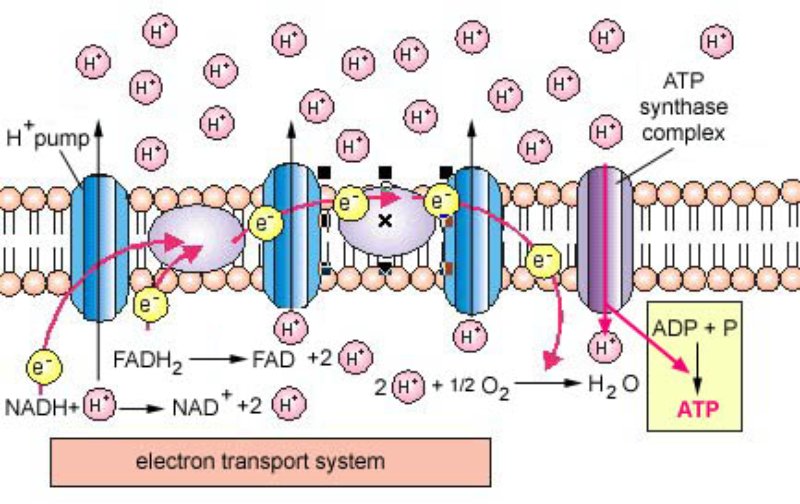
- Facilitating the transfer of electrons from the primary donor to terminal acceptor
- Conserving energy that been released during electron transfer for ATP synthesis
Several oxidative-reductive enzymes such as NADH dehydrogenases, flavoprotein, iron-sulfur protein, and cytochromes participate in electron transfer. Also, non-protein electron carriers, called guinones, are involved in electron transfer.
In the electron transport process, the hydrogen ion (H+)源于NADH、FADH dissociation of water in the cytoplasm are extruded to the outer surface of the membrane. The extrusion of H+to the outer membrane results in the accumulation of OH-inside the membrane. This separation of H+噢,-results in pH and charge differentiation between both sides. This pH and charge gradient between two sides of the membrane is called proton motive force and makes the membrane charged like a battery. H+moves back into the membrane through a pore created by ATP synthase, allowing the enzyme to prepare ATP at the expense of this gradient.