Parallel resistors are resistors connected in a way that the current can take more than one path. You can see an example of resistors connected in parallel in figure 1.

Fig. 1: Resistors connected in parallel.
In resistors connected in parallel thecharge and energyare preserved (as in any other circuit). Current and Voltage behave differently in parallel resistors when compared to series resistors. Let's use figure 1 as an example.
Current
Current (Amperes), refer to thenumber of electronsthat are passing through a certain point of the circuit in a given time (Coulombs per second). If the electricity can take more than one path, that means that the current will split between the different possible paths (R1 and R2). The intensity of current that will go through each path will depend onOhm`s Law. The path with the lowest resistance will receive more current.
Voltage
Voltage behaves differently in resistors connected in parallel. Voltage is the energy contained per Coulomb of charge, so when the electricity splits between R1 and R2 the current splits, but the energy that each of the Coulombs is carrying isthe same
For example, if the battery is providing 12 volts both R1 and R2 will receive 12 volts each, while the current will be split between them.
Equivalent Resistor
An equivalent resistor is a resistor that will have the same effect on the circuit than the resistors already in the circuit (R1 + R2 in this case). In parallel resistors calculate the equivalent resistor is a bit more complex than inseries resistors. In order to be able to calculate the resistor, you would need to follow the next formula (Fig.2):
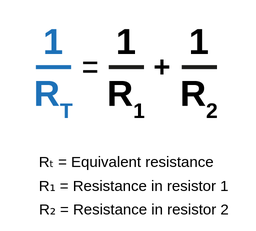
图2:公式计算等效电阻in series connected in parallel.