Single-end sequencing
As the name suggests, single-end sequencing is when the sequencing process is performed only from a single direction. As we have discussed earlier inCluster generationafter bridge PCR amplification, we have two types of DNA molecules that are complementary to each other, and we washed away one of them. We then sequence the remaining DNA that have the same direction. If we only sequence these DNA (all having the same direction), it is called single-end sequencing.
Paired-end sequencing
In paired-end sequencing the DNA is being sequenced from both directions (see Figure 3 below). The process is identical to the single-end sequencing, but after the end of the sequencing process, we continue by running another round of cluster generation and removing the strands with the direction that we have sequenced previously (the DNA havingblue adapters). Therefore, we are left with only DNA havingpurple adapters. This DNA has the complementary sequence of the first DNA.
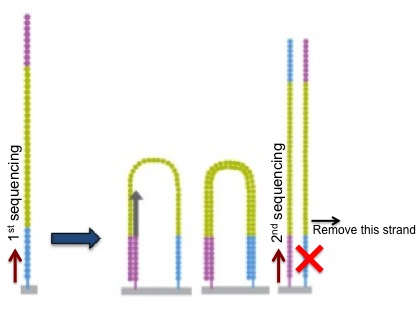
Figure 3.Paired-end sequencing implies that the sequencing is performed from both directions. The DNA needs to be flipped by running another round of cluster generation.
当使用paired-end测序检测structural variants in the genome with higher confidence because we have higher sequence coverage and increased specificity when aligning back to the genome compared with single-end sequencing. When sequencing long DNA fragments it is preferred to use paired-end sequencing. As well as when we want to study deletion, mutations, or chromosomal rearrangements.