迟钝的(希腊“自我”的组织anisms) can use thesun's energyto build complex organic molecules from carbon dioxide and water. The overall chemical reaction can be written as:
6 H2O + 6 CO2- > C6H12O6+ 6 O2
This reaction is only superficially correct and the underlying mechanisms are extremely complex. The many reactions involved in photosynthesis can be divided into two separate processes; thelight reactionand theCalvin cycle. In this simulation, we will focus on the light reaction — the conversion of sunlight into chemical energy in the form of ATP and the reducing agent NADPH.
Location
In eukaryotic organisms, photosynthesis takes place in the chloroplast. These cell organelles consist of three membranes. The innermost membrane forms stack-like structures called thylakoids. More specifically, photosynthesis takes place in the thylakoid membrane.
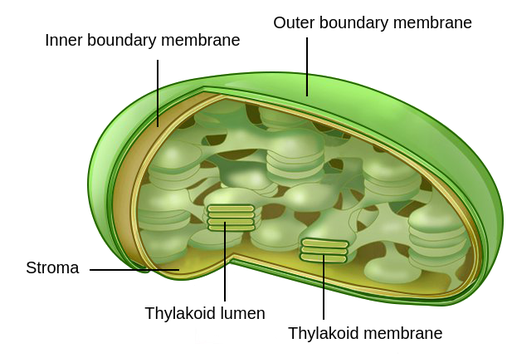
There is an interesting story to the two surrounding membranes: Chloroplasts used to be prokaryotic algae that were ingested by early eukaryotic cells. Instead of being digested, they turned out to be useful in providing energy for the cell. The two symbiotic cells became dependent on each other, and the prokaryote became what we now call an organelle. The two membranes are remnants from the vacuole of the eukaryote (outer membrane) and the plasma membrane of the prokaryote (inner membrane).