Liquid-liquid Extraction: Extract caffeine from your everyday drinks Virtual Lab
Learn how to use a separating funnel to extract and dry a water soluble compound, such as caffeine from tea or coffee. Can you also predict the liquid phases in which the compound can be found?



Try Labster's 30-Day All-Access Trial for Free
Discover one of our 200+ simulations today
- Description
- Features
About the Liquid-liquid Extraction: Extract caffeine from your everyday drinks Virtual Lab
Most students (and teachers!) can relate to caffeine's effect, either in tea or coffee. In the Liquid-Liquid Extraction simulation, you will learn how to extract caffeine as powder from its liquid form.
Master the separatory funnel
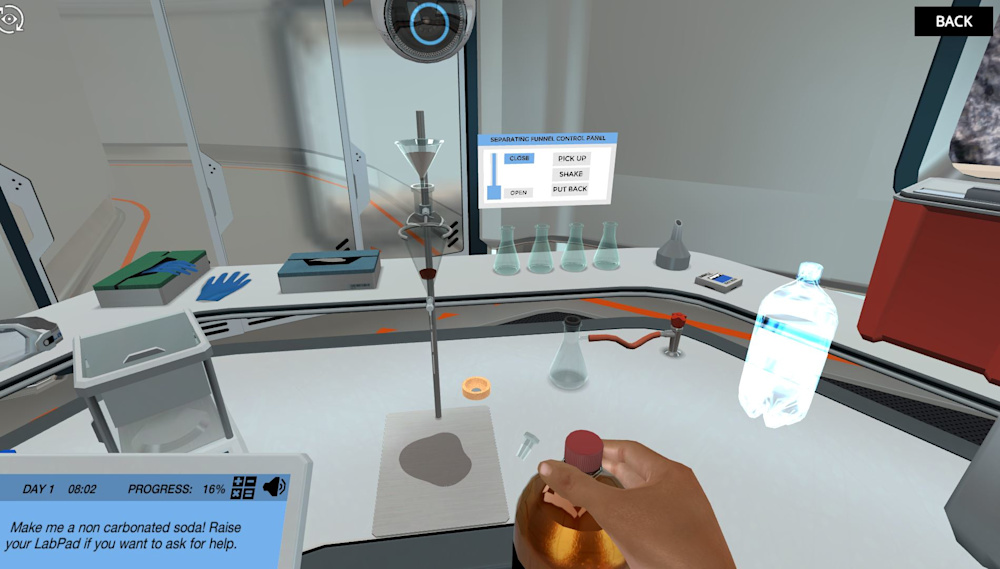
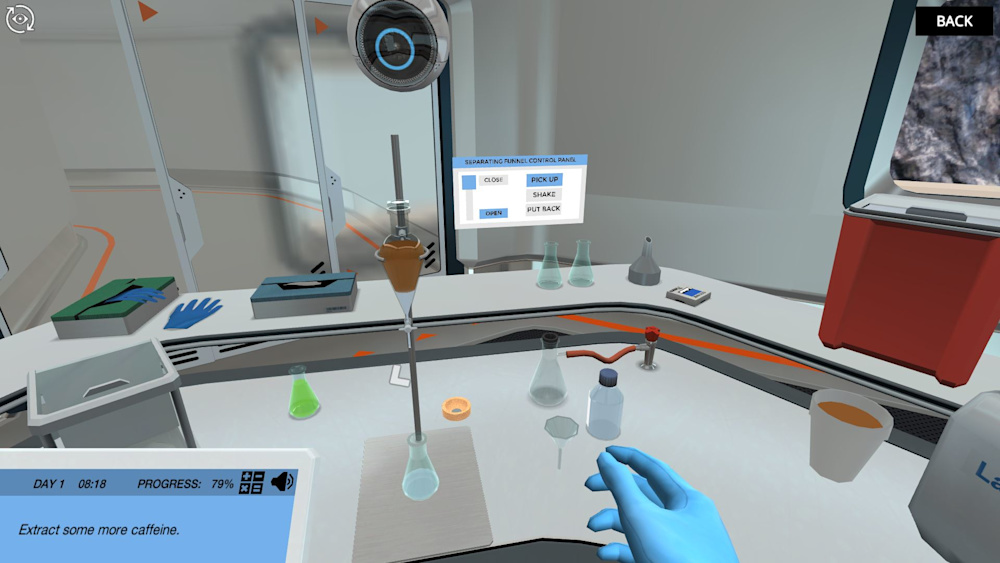
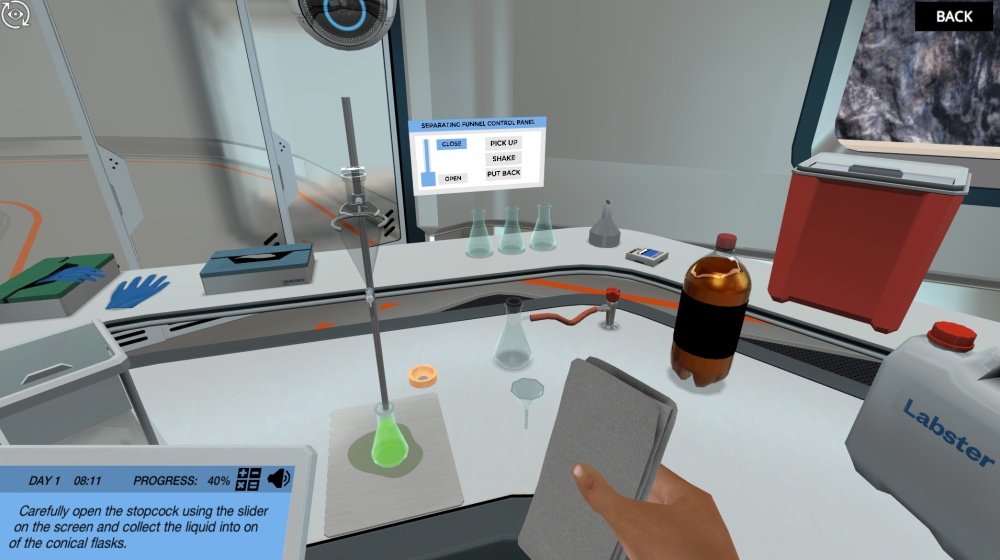
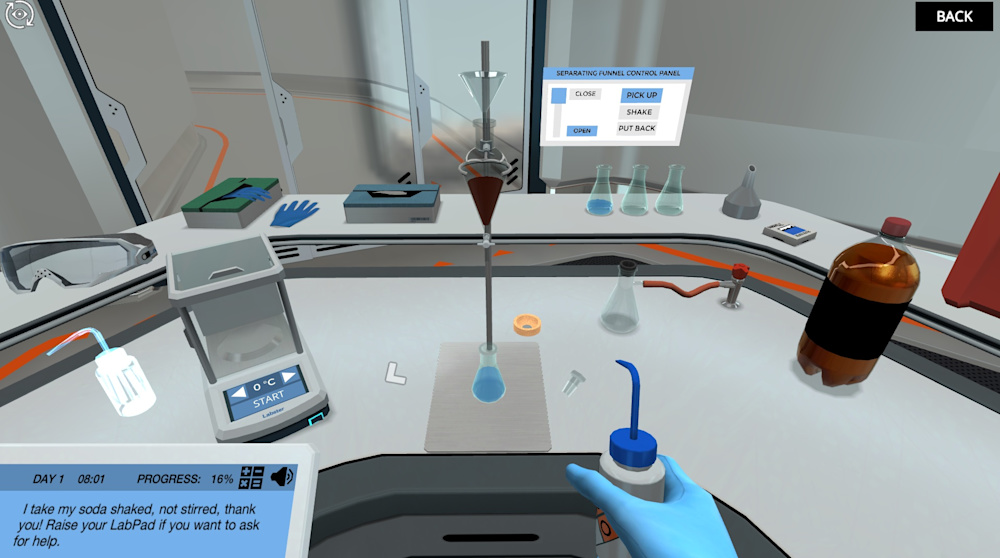
学习正确的分液漏斗的使用first decanting a simple soda, removing any gas from the liquid perfection you shake, and venting the separatory funnel. This will teach you how to correctly set up the equipment while preparing you for the next steps. Next you’ll extract the caffeine, using an aqueous and organic phase to transfer the caffeine in multiple steps, from the aqueous coffee to dichloromethane.
Learn from your mistakes!
If you’ve ever made a mistake in the lab, this virtual lab has your back. Learn how to use a separatory funnel without fear of messing things up. In this simulation you have the freedom to make mistakes and learn from them as you go. And if you make a mess, don’t worry: Dr. One will be there to help clean up!
Use practice to learn theory
In liquid-liquid extractions the main focus is on using the separatory funnel. This is used here to separate caffeine from its aqueous phase into an organic phase and then dry it for a tiny amount of dried caffeine powder. Complete this task to help answer the question: Does a cup of tea contain more caffeine than a cup of coffee?
Learn how to use a separating funnel to extract and dry a water soluble compound, such as caffeine from tea or coffee. Can you also predict the liquid phases in which the compound can be found?
At the end of this simulation, you will be able to...
- Describe the extraction process and its purpose, giving examples of its applications
- Explain the fundamentals of extraction theory and describe the process on molecular and operational levels
- Explain the use of drying agents and choose an appropriate drying agent for a variety of solvents
- Confidently predict which liquid layer is which and identify the layer your product is in
- Carry out step-by-step single and multiple extractions for a variety of solvents and combinations
- Competently demonstrate practical techniques required specifically for solvent extraction by following best practice
- Troubleshoot and rectify common problems encountered in solvent extraction protocol and rotary evaporation
- Competently carry out the work up steps that follow liquid-liquid extraction to isolate a product (filtration, solvent evaporation)
Length: 35 Minutes
Accessibility mode: Not available
Languages: English (United States)
Alignment pending
Alignment pending
Alignment pending