Microscopy Virtual Lab
Analyze the microscopic structure of the small intestine and learn the advantages and limitations of light, fluorescence and electron microscopy.



Try Labster's 30-Day All-Access Trial for Free
Discover one of our 200+ simulations today
- Description
- Features
About the Microscopy Virtual Lab
Join the Microscopy lab and learn about the different types of microscopy to understand the mechanisms behind it. You will be trained in light microscopy, transmission electron microscopy and fluorescence microscopy.
Use magnification
In the Microscopy lab, you will be presented with chicken intestinal slides that have been stained with Anilin, Orange G and Fuchsin. Using the 5x magnification, you will identify the villus and then proceed with higher magnifications to identify smooth muscle, Relatedcellular tissue, epithelial cells, Goblet cells and the nuclei.
Try out the electron microscope
Electron microscopes can be used to visualize objects that are too small to see when using a light microscope—for example, the microvilli, mitochondria and the junctions between cells. In the Microscopy lab, you will examine a chicken intestine slide that is specially prepared for a transmission electron microscope. You can zoom in and out to observe different cellular structures.
Learn about fluorescence staining techniques
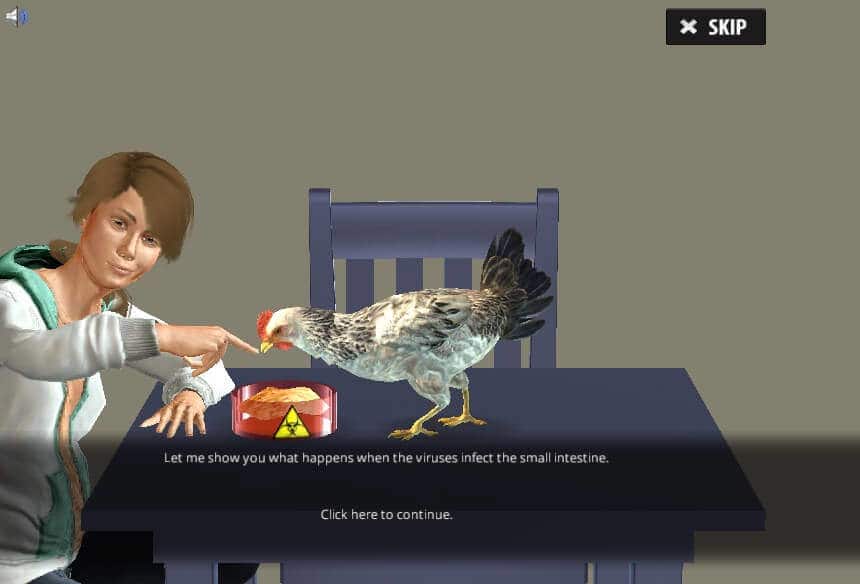
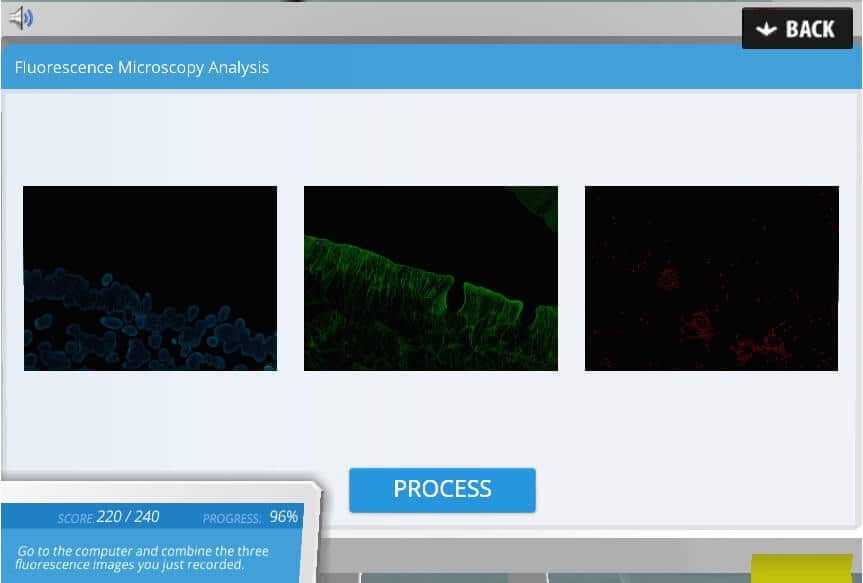
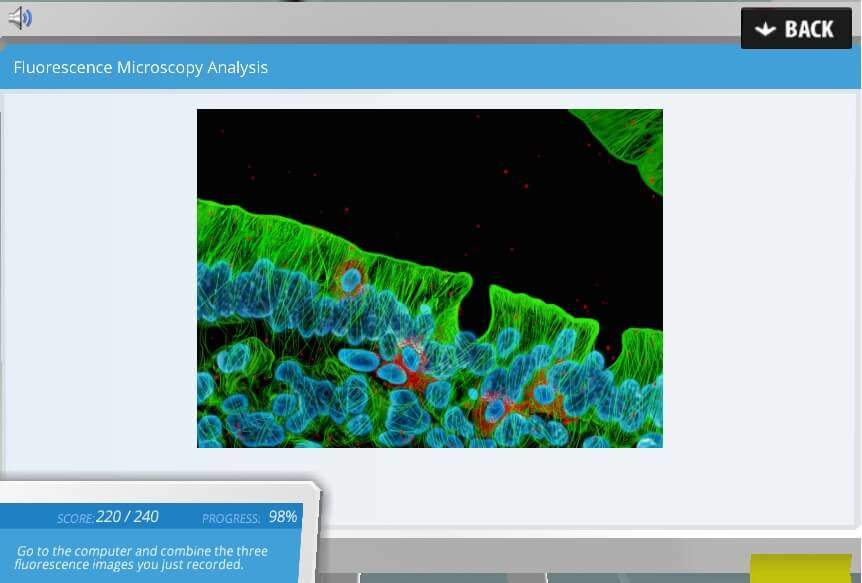
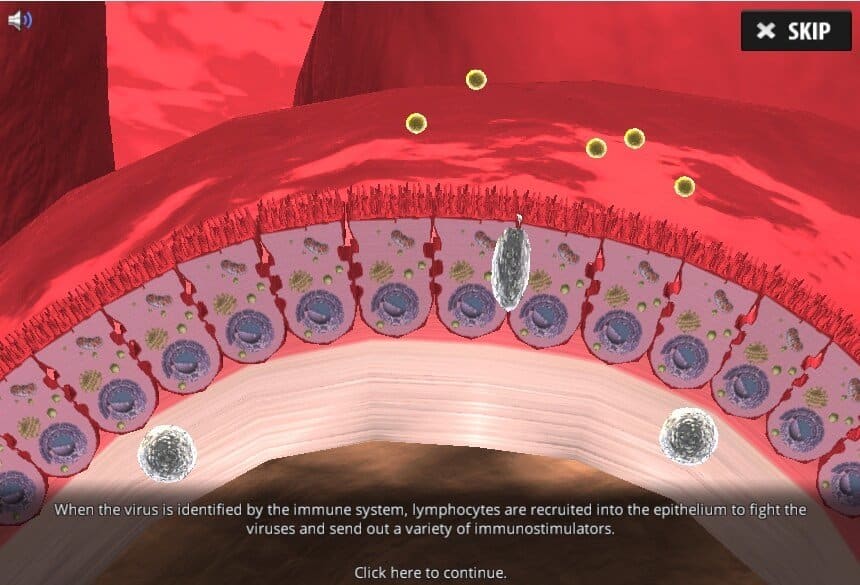
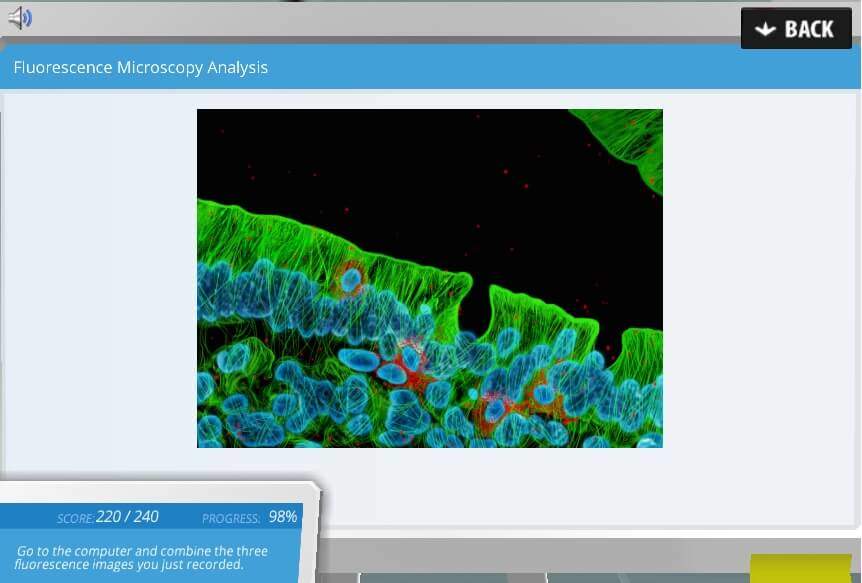
You will learn about fluorescence staining techniques and how they can be used to visualize specific structures. For example, by staining the DNA with DAPI, you can easily identify a cell’s nucleus. In this part of the lab, you will examine a chicken intestine sample that is infected with a retrovirus and observe how the virus infects the lymphocytes and how it inhibits inflammation. The retrovirus can be further developed as a medicine for coeliac disease.
Analyze the microscopic structure of the small intestine and learn the advantages and limitations of light, fluorescence and electron microscopy.
At the end of this simulation, you will be able to...
- Understand different microscopy techniques and their limitations
- Identify various cell types and cellular structures
- Understand coeliac disease and intestinal inflammation
- Understand staining techniques
Length: 45 Minutes
Accessibility mode: Available
Languages: English (United States), German, Spanish, French, Italian
Not directly assessed, could support many areas depending on educators approach
1.1 Introduction to cells*
1.2 Ultrastructure of cells
生物学单位2:细胞的结构和功能n