Monogenic Disorders Virtual Lab
Learn about the monogenic disorder Cystic Fibrosis and its inheritance from one generation to the next.



Try Labster's 30-Day All-Access Trial for Free
Discover one of our 200+ simulations today
- Description
- Features
About the Monogenic Disorders Virtual Lab
Cystic Fibrosis is a type of monogenic disorder caused by a mutation in both copies of the CFTR gene (Cystic Fibrosis Transmembrane Conductance Regulator).
Learn about Cystic Fibrosis
The CTFR gene encodes a protein that regulates the movement of chloride ions in and out of cells that produce mucus, sweat, saliva, or tears. Cystic Fibrosis is also called mucoviscidosis because patients suffer from thickened mucus. People with one mutated copy of the CFTR gene are called carriers and do not experience any symptoms.
Patients with Cystic Fibrosis
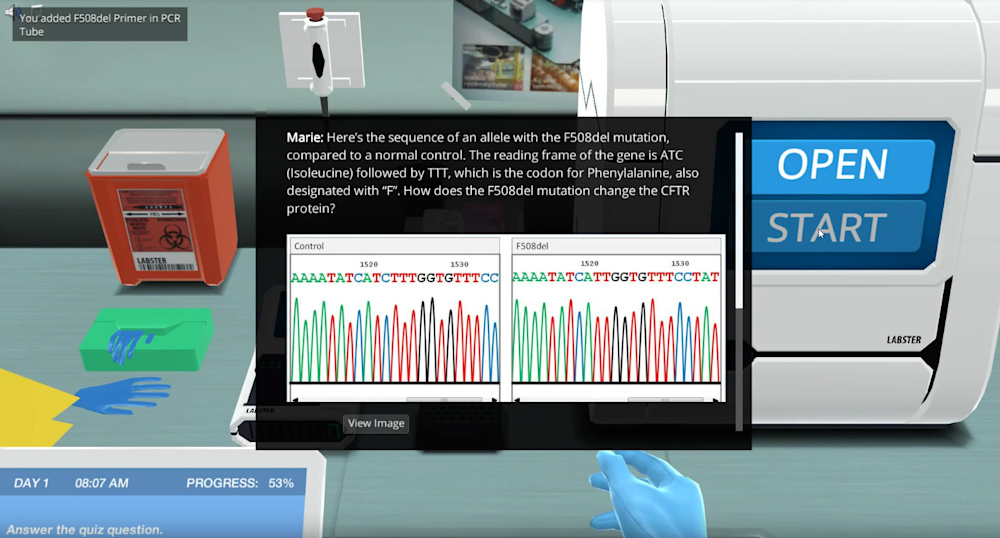
囊胞性纤维症是最常见的常染色体的份sive disease among Europeans. It is characterized by allele heterogeneity, meaning that CFTR genes from many different patients with Cystic Fibrosis show different type of mutations. The most common alteration in the CFTR gene is a deletion of three nucleotides, resulting in a loss of the amino acid phenylalanine (F) at position 508 in the protein, and is hence called ΔF508.
Apply your knowledge
In the Monogenic Disorders lab, you will learn about the monogenic disorder Cystic Fibrosis and its inheritance from one generation to the next. You will also learn how a single gene mutation leads to a dysfunctional, disease-causing protein.
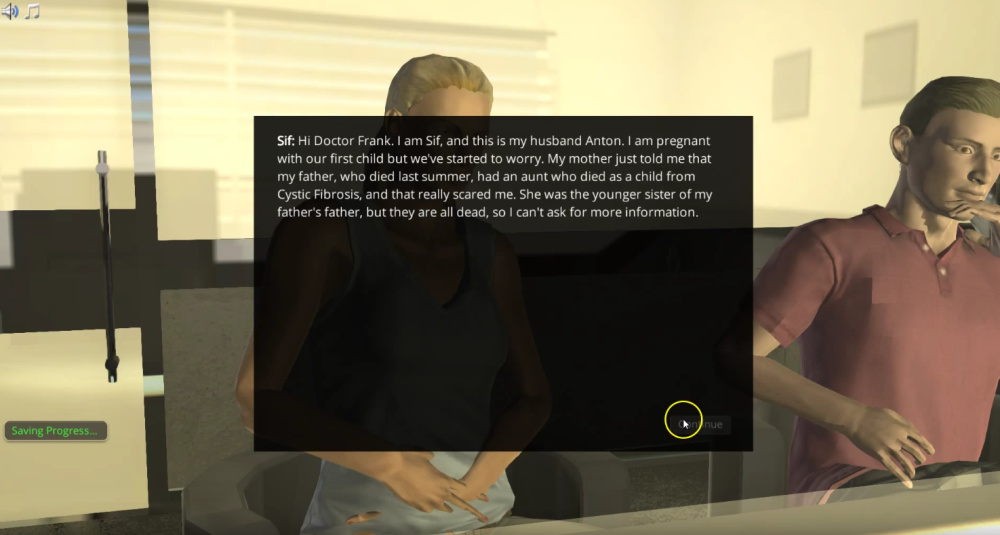
Will you be able to consult a young couple on the potential risk for their future children to develop Cystic Fibrosis?
Learn about the monogenic disorder Cystic Fibrosis and its inheritance from one generation to the next.
At the end of this simulation, you will be able to...
- Understand the basic concepts of inheritance
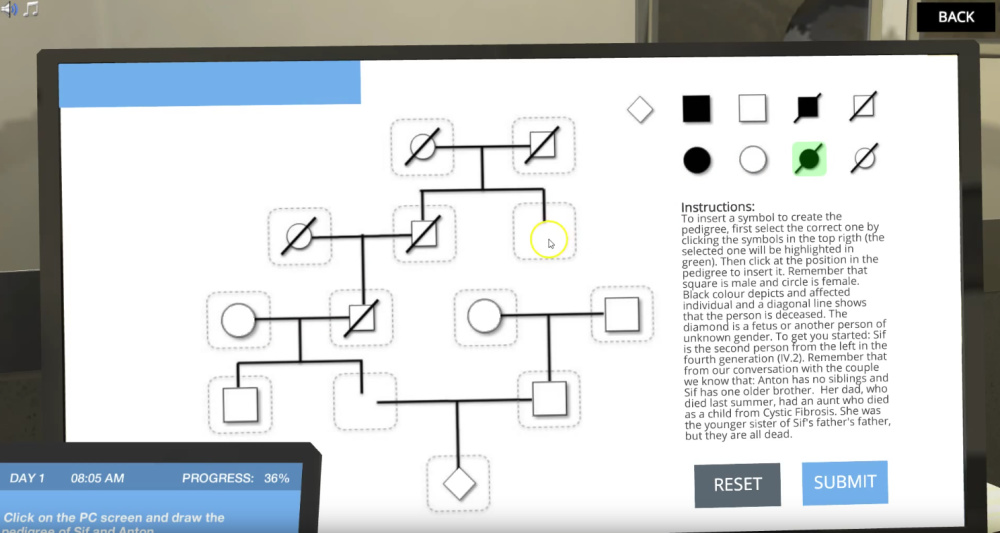
- Build and interpret a pedigree based on family data
- Understand genetic risk assessment and counselling
- Understand the work of a genetics laboratory
Length: 63 Minutes
Accessibility mode: Not available
Languages: English (United States)
HS-LS3-1, HS-LS3-2, HS-LS3-3
3.4 Inheritance
No direct alignment