Sensory transduction: Learn why you feel pain when you get hit by a rock Virtual Lab
Learn the basic mechanisms of sensory transduction by performing in vitro and in vivo experiments and determine which anesthetic drug will allow your friend to keep climbing a mountain without having the muscles affected.



Try Labster's 30-Day All-Access Trial for Free
Discover one of our 200+ simulations today
- Description
- Features
About the Sensory transduction: Learn why you feel pain when you get hit by a rock Virtual Lab
How do anesthetic drugs work? In this simulation, you will learn the basics of sensory transduction by testing and comparing the mechanisms of action of two anesthetic drugs. Explore which stimuli activate different types of sensory neurons and behold the flow of ions inside an axon. Perform a patch-clamp experiment to analyze how the anesthetics impact the pain transduction in the nociceptors, and confirm the results by performing some in vivo experiments before selecting the best pain killer for your friend.
Explore sensory neurons
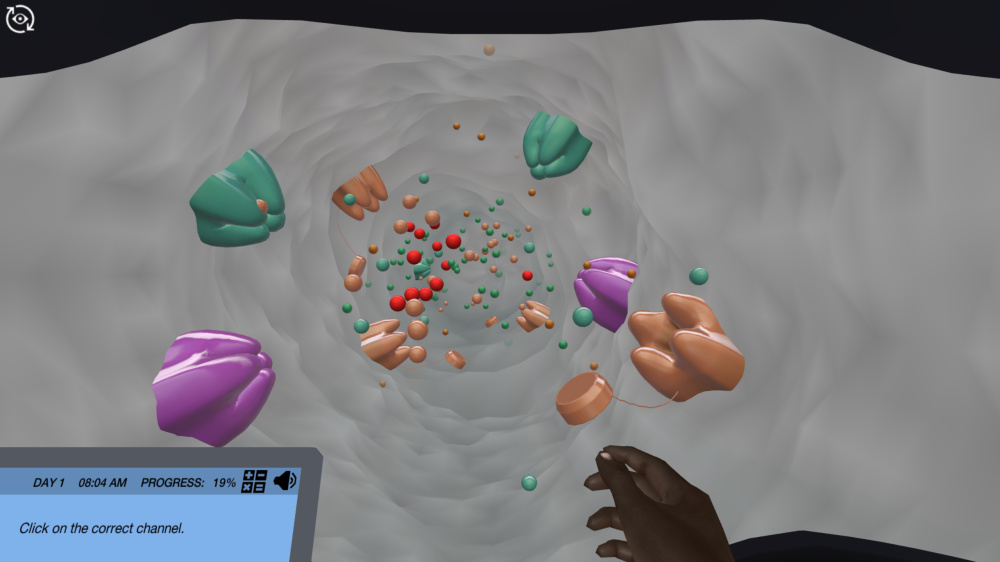
Which neurons are activated when you get a cut? What about when you are hit by a rock? Explore the different types of sensory neurons on the holo-table and see the impact of six different stimuli as many times as you want! Then, figure out which stimuli activate nociceptors to transduce pain, and dive into an axon to learn which transmembrane receptor makes nociceptors sensitive to pain and the flow of ions inside.
Set up your own patch-clamp experiment
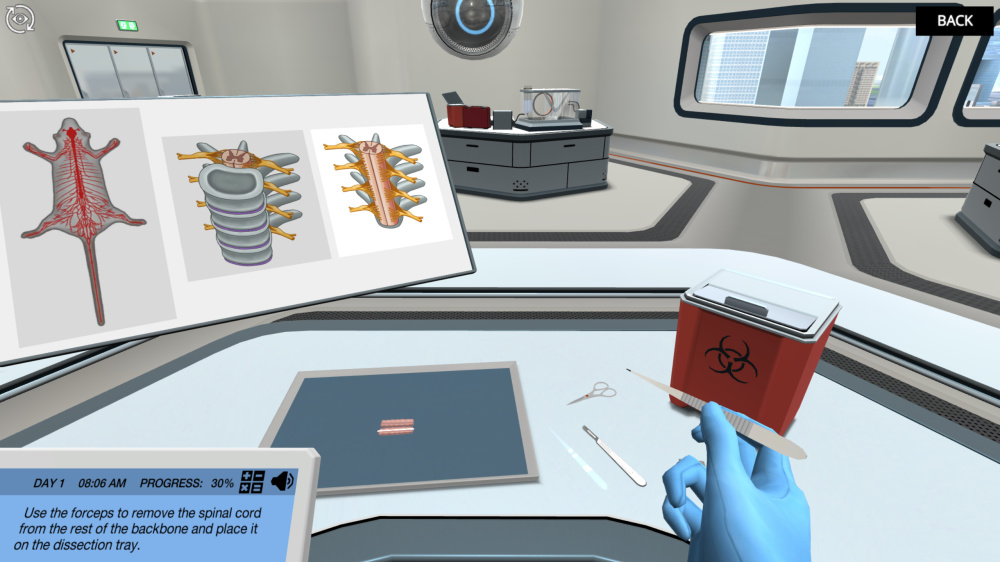
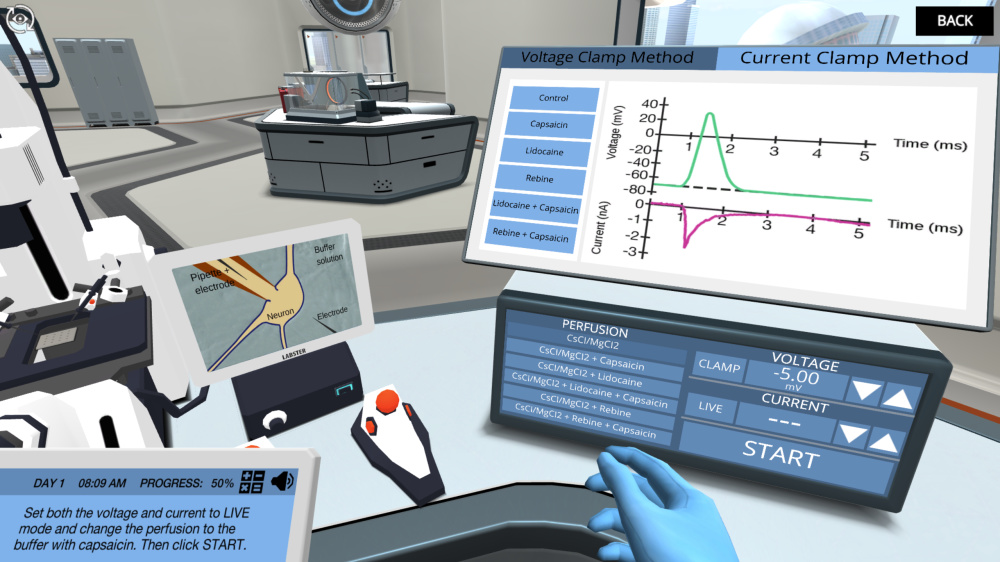
You will dissect some dorsal root ganglia from a rat’s spinal cord to use for a patch clamp experiment. You will set up the equipment and use different buffers to conduct the voltage-clamp experiment. You will then be able to see and analyze the results on the virtual PC screen in a short time, avoiding long waiting times in between changes of buffers, and allowing you tol test the effect of the two anesthetics to evaluate their effect on the flow of ions and in sensory transduction.
Confirm your results with an in vivo model
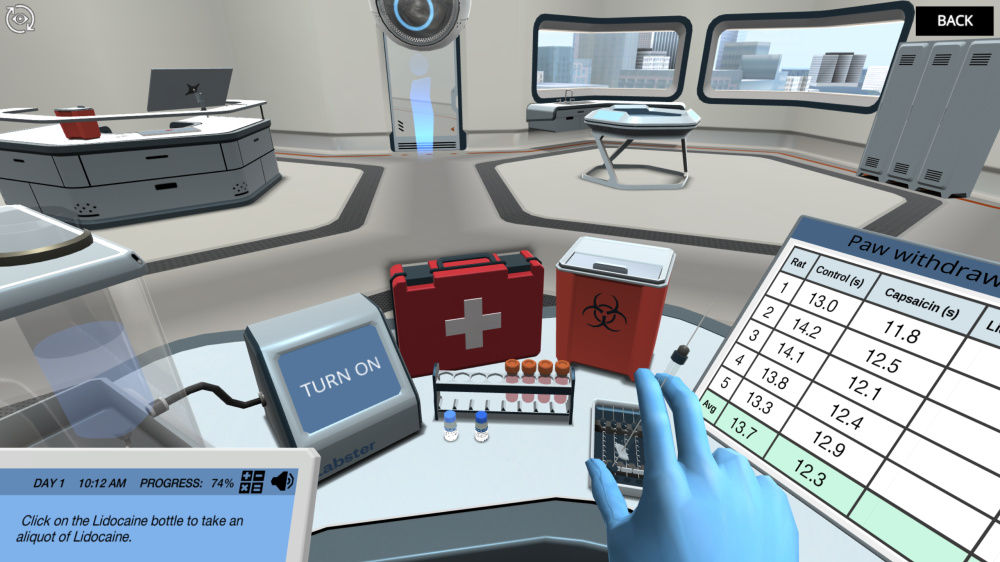
After analyzing the in vitro data, you will determine if the differences in the effect of the two pain killers are confirmed in in vivo studies. This includes conducting latency to withdrawal experiments and analyzing motor function experimental results. You will finally dive one last time into the axon to see the effect of each anesthetic drug inside the nociceptors. Will you be able to determine which drug is best to give your injured friend?
Learn the basic mechanisms of sensory transduction by performing in vitro and in vivo experiments and determine which anesthetic drug will allow your friend to keep climbing a mountain without having the muscles affected.
At the end of this simulation, you will be able to...
- Understand the types of sensory neurons and their responses to different stimuli
- 描述感官recepto的反应r to chemical stimuli at the cellular and organismal level
- Set up a voltage-clamp experiment, and measure and interpret changes in current in response to chemical stimuli
- Analyze and interpret patch clamp results to contrast how two sodium channel blockers inhibit capsaicin-induced excitability
- Collect data and analyze it on withdraw reflex time in an acute pain model
Length: 38 Minutes
Accessibility mode: Not available
Languages: English (United States)
Early Stage Bachelors Level
US College Year 1
US College Year 2
HS-LS1-2
A.3 Perception of stimuli
No direct alignment